
BTC Brief: Québec’s Data-Centre Moment
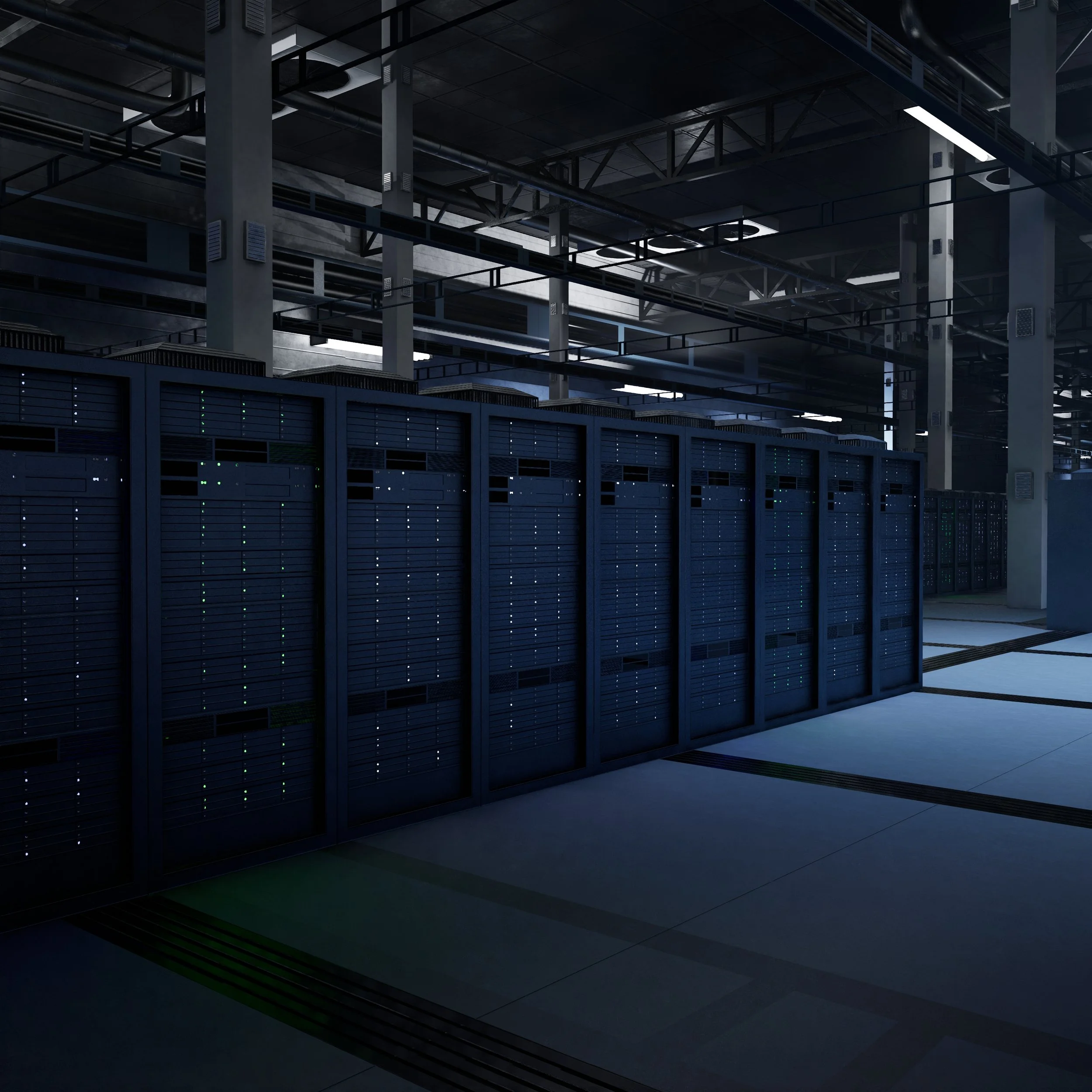
Québec finds itself at a crossroads. The world is fragmenting in terms of trade, and nation-states are shifting their views on economic security, with countries that have perhaps complacently enjoyed their privileged positions in years past now recognizing the primacy of in-house ownership of the infrastructure that drives today's economies.
In this sense, the interest in data centres in Québec can be seen less as a trend than an imperative, beginning with Québec Premier François Legault's signals and continuing with the vision established in Budget 2025 in Ottawa.
This is not an ideological priority, nor is it a theoretical one. Data centers have quietly become the factories of the 21st century. Artificial intelligence learning, cloud storage solutions, big data analytics, and real-time internet services have become driving engines of productivity and competitive economies.
Nations and provinces which do not provide compute power within their own territories will increasingly be forced into dependencies based on an externally controlled set of systems. With access to hydroelectric power resources, cheap factory electricity rates, and proximity to major markets in North America, Québec is among a handful of regions with a structural capacity to address this challenge.
However, this challenge is paradoxically met with a very different reality, namely that electricity production is a non-rival good with a fixed capacity. The power requirements of major data centres are constant and under heavy load. With accelerating demand, the challenge for electricity providers across America is a tricky tightrope walk: can they increase capacity without negatively impacting affordability, reliability, and public faith in the electricity grid? Québec’s is sound, but not unlimited, and sensibly, there is a marked unwillingness to dedicate this capacity to a use so specialized.
That is exactly where Bitcoin mining deserves a closer consideration.
Years on, Bitcoin mining in Québec has been described as a simple industrial load: energy intensive, rigid, and in conflict with more valuable economic activities. The province did not hesitate to establish limits, moratoria, and connection requirements. Of course, this argument had merit at the time. Early mining operations functioned very much like industrial consumers, taking power regardless of what the grid offered, providing very little in return other than jobs and tax dollars.
It is not a change in the grid but a change in mining technology and economics.
A system such as Bitcoin mining can never really be compared with most of the largest consumers of electricity in any contemporary network because mining operations can cut or stop their load in a matter of seconds in response to a price signal, a threat to a grid, or a curtailment directive. In contrast to data centers which support latency-sensitive applications, miners can simply stop their operations during peak hours without harming their lifespan.
This is simply a euphemism for saying that, in reality, Bitcoin mining can be considered a form of demand side infrastructure. During times of surplus generation over-excerpt, during peak hydro months, or when exports become economically non-feasible, miners can help soak up excess electricity supply that would otherwise have to be shed or allocated at a reduced rate. Then, when peak demand returns, this load can vanish in an instant, providing relief and capacity for residences, healthcare settings, and critical data centers. Volatility can, in reality, be smoothed by mining.
This characteristic will become an increasingly attractive factor in major AI/cloud investment in Québec. The nature of compute workloads is flat and inelastic, which drives up the base level of demand in the system. Pairing these kinds of installations with a variety of other loads, such as Bitcoin mining, can improve network efficiency, making investment in generation and transmission activity more feasible in the long term. In other words, miners and data centers are not competitors but complementary elements of an efficient energy system when considered in this manner.
Moreover, a strategic level of policy discourse is in play. A strategy of using public capital, via such bodies as the Caisse de dépôt et placement du Québec and Canada Infrastructure Bank, to de-risk and fast-track projects deemed strategic in nature is being deployed by governments. In this case, because industries related to maintaining grid resilience will have to be measured based on their role in the system rather than their consumption, an activity such as Bitcoin mining, when constrained by a set of performance requirements, will offer exactly such a margin of optionality in a modern grid.
Nothing above signals a return to unconditional electricity access. The argument is not for unconditional electricity allocation but for better integration. Québec can establish conditional connection agreements wherein miners are allocated electricity in return for agreeing to terms of demand response, curtailments, and grid support. Time-of-use pricing schemes, interruptible tariffs, and performance incentives will make sure that public interests come first.
Québec’s hydroelectric power network narrows this argument further. Such a load, which utilizes low carbon electricity in order to keep a balanced mix of renewables, undermines the proposition that Bitcoin is harmful when this is seen as a basis for arguing an ingrained problem with environmental damage.
The real significance of this surge in demand for data centers in Québec is a flip of a switch. With electricity, you are no longer talking about a utility input but a strategic asset, which is inextricably tied to a nation’s sovereignty over their economy. As a necessity commodity, compute will be not less important than steel or oil in terms of strategic planning in the future. The real trade-off is not between data centers and Bitcoin mining. The trade-off is between inflexible, dedicated infrastructure and a grid optimized for resilience and flexibility. And if Québec pursues the latter, it can be a leader not only in digital infrastructure but in how this flexibility can make a better grid in an AI future.
In this vision, Bitcoin mining is not a problem. It’s infrastructure.
This is why on February 11, 2026, the Consortium will convene policymakers, energy experts, industry leaders, and technologists in Québec for “Québec Loves Data Centres” - a focused discussion on how compute infrastructure, electricity policy, and grid resilience intersect in an era defined by AI, cloud, and sovereign digital capacity.
The Consortium’s work is grounded in a simple premise: Bitcoin policy should not be debated in isolation, nor dismissed through outdated assumptions. It must be examined where it actually belongs - within conversations about energy systems, infrastructure planning, and national competitiveness. As Québec evaluates how to scale data centres without undermining affordability, reliability, or public confidence in the grid, flexible demand-side tools deserve serious consideration.
If Québec gets this right, it can do more than attract data centres. It can demonstrate how a modern, low-carbon grid can support growth, resilience, and sovereignty in an AI-driven economy. And in that future, Bitcoin mining - properly structured, conditioned, and integrated - has a legitimate place at the table.
The invitation is open. The conversation is overdue.
Register here.